
Creative Ideas for Decorating an Indoor Patio
An indoor patio can combine the comfort of an interior room with the relaxed character of an outdoor living area. The ideas below focus on plants, flexible seating, lighting, color, and decorative focal points while keeping the layout practical.
Quick Guide
- Choose furniture that fits the available floor space and leaves clear walking paths.
- Use vertical planters or wall decor when floor space is limited.
- Layer plants, textiles, and lighting instead of relying on one decorative feature.
- Keep frequently used seating and dining surfaces easy to reach.
- Select a small number of colors or materials to connect the different elements.
Artistic Planter Decorations

Group colorful planters on a table or shelf to create a compact display. Vintage jugs and hand-painted pots can provide variety, but repeating one color or shape will keep a mixed collection from looking cluttered.
Vertical Garden Wall

A vertical garden wall adds greenery without occupying much floor space. It works especially well behind a bench or along an otherwise empty wall. Leave enough visual breathing room around the display so the individual plants remain noticeable.
Outdoor-Inspired Dining Area

Bring an outdoor dining look indoors with a table, comfortable chairs, greenery, and a floral centerpiece. Match the table size to the room and preserve a clear route around the chairs. In a small indoor patio, a simple centerpiece prevents the tabletop from feeling crowded.
Atmospheric Lighting Options

Use string lights and decorative lanterns to define seating or dining areas after dark. Distribute the lights across the room rather than concentrating them in one corner, and keep cords and decorative pieces away from walking paths.
Colorful Patio Rugs

A colorful rug can visually anchor a seating arrangement and introduce pattern without adding more furniture. Choose a scale that relates to the seating area, and coordinate one or two rug colors with nearby cushions, planters, or artwork.
Cozy Patio Living Room

Arrange comfortable seating around a shared focal point to create an indoor patio living room. Potted plants soften the edges of the arrangement, while a rug and overhead string lights help define the zone. Avoid adding so many accessories that side tables or pathways become difficult to use.
Fire Pit as a Visual Focal Point
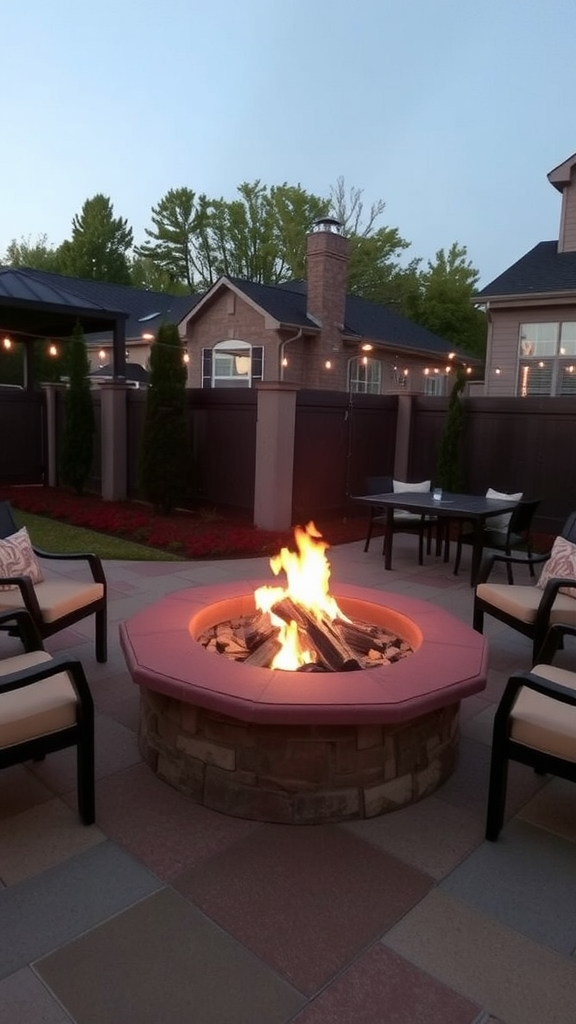
The circular seating arrangement shown around the fire pit offers a useful layout idea: angle chairs toward a central feature to encourage conversation. For an indoor patio, choose a focal point appropriate for the room rather than bringing an outdoor fire feature inside. Keep the center open enough for people to approach and leave their seats comfortably.
Relaxing Hammock Setup

A hammock can establish a dedicated reading or resting area on an indoor patio. Surround it with greenery and add only a few cushions so the setup remains uncluttered. Check that its placement does not block doors, storage, or the main route through the room.
Canopy and Shade Solutions

A parasol can inspire a defined dining zone in a bright patio space. Consider its visual scale before using one indoors, since a large canopy may overwhelm a compact room. Where shade is unnecessary, the same sense of enclosure can come from positioning the table beneath a suitable overhead feature.
Water Feature Serenity

A small fountain can serve as a central accent among grouped plants and flowers. Place it where it can be seen without interrupting movement through the room. Before choosing any indoor water feature, consider access for routine cleaning and the surrounding surfaces.
Seasonal Decorative Accents

Seasonal accents offer an easy way to update an indoor patio without changing the main furniture. For fall, pumpkins and colorful flowers can be grouped on a table or near seating. Limit the display to a few locations so everyday surfaces remain usable.
Creative Privacy Solutions

Textured privacy screens can separate a seating area from the rest of the home and create a clear backdrop for a chair. Trellis-style panels or grouped plants can provide a similar visual division. Position screens carefully so they do not obstruct entrances or make a small room feel enclosed.
Transforming Small Spaces With Vertical Gardens

Wall-mounted planters are particularly useful when a small indoor patio lacks floor space. Arrange terracotta pots as one deliberate composition rather than scattering them across several walls. Keep nearby surfaces relatively simple so the vertical garden remains the main feature.
How to Choose the Right Indoor Patio Ideas
Start with how the room will be used: dining, reading, entertaining, or displaying plants. Select one primary function, then add furniture and decor that support it. For limited spaces, prioritize vertical storage and compact arrangements. In larger rooms, rugs, lighting, screens, or grouped planters can divide the patio into distinct zones without filling every open area.
Common Mistakes to Avoid
- Choosing furniture before checking how it affects doors and walking paths.
- Using too many unrelated colors, patterns, and planter styles at once.
- Filling every surface with plants or seasonal decorations.
- Placing tall screens or vertical gardens where they visually crowd the seating area.
- Copying outdoor features indoors without considering whether they are appropriate for the room.
Frequently Asked Questions
How can I decorate a small indoor patio?
Use wall-mounted planters, a compact seating arrangement, and one clear focal point. Keeping the floor and main pathway open will make the layout easier to use.
How do I make an indoor patio feel connected to the outdoors?
Combine plants, natural-looking forms, layered lighting, and outdoor-inspired furniture arrangements. Repeating a few colors or planter styles will create a more cohesive result.
What should be the focal point of an indoor patio?
A vertical garden, grouped planters, a patterned rug, a dining table, or a central decorative feature can all work. Choose one that supports the room's main purpose.
How can I add privacy without closing off the room?
Use a textured screen, trellis-style panel, or grouped plants to define the seating area. Avoid covering every side, and keep entrances and primary sightlines open.
How often should I change seasonal patio decor?
Update it whenever it suits your home and routine. Swapping a small centerpiece, flowers, or a few accents is usually enough to change the look without reorganizing the entire room.



0 Kommentare