
13 Borax Garden Tricks and When to Use Caution
Borax appears in many garden tips for controlling pests, weeds, and plant problems. However, it is not suitable for every plant or situation, and applying too much may damage plants or affect the surrounding soil. This guide reviews 13 commonly suggested uses while highlighting safer decision-making and practical alternatives.
Quick Guide
- Check the product label before using borax outdoors or around plants.
- Avoid broad applications to lawns, garden beds, compost, seeds, and houseplants.
- Keep treatments away from wanted plants unless the label specifically supports that use.
- Identify the pest, disease, or weed before choosing a treatment.
- Use targeted garden products or nonchemical methods when the effect of borax is uncertain.
Borax in the Garden: 13 Commonly Suggested Uses
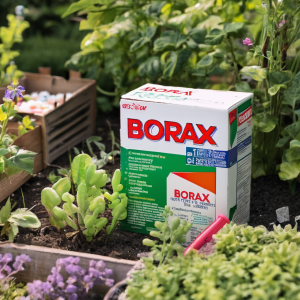
The ideas below are frequently associated with borax, but they should not be treated as universal instructions. Product formulations and permitted uses vary, so follow the label and avoid assuming that a household product is automatically appropriate for plants.
Managing Fungal Problems
Borax is sometimes suggested for black spot, powdery mildew, leaf curl, and other plant symptoms. Because similar symptoms can have different causes, identify the problem before treating it. Improve spacing and airflow where practical, remove badly affected material, and choose a treatment labeled for the specific plant and problem rather than applying a homemade spray indiscriminately.
Ant Control
Borax-and-sugar bait is a common ant-control idea, but an exposed mixture may also be accessible to children, pets, and other animals. If ants require control, use a contained bait intended for the location and place it according to its label. First determine where ants are traveling so treatment can remain targeted.

Targeting Weeds
Although borax is often promoted as a weed treatment, it should not be assumed to spare nearby plants. Avoid pouring a solution across beds, lawns, or areas where runoff could reach wanted growth. Hand removal, mulch, or a weed-control product labeled for the site offers more control over where treatment occurs.

Changing Soil Conditions
Some advice recommends borax for making soil more alkaline around roses, lilacs, and daffodils. Do not add it based only on plant type or appearance. If soil conditions are a concern, begin with a soil test and use amendments recommended for the reported result. This avoids changing an entire bed without knowing what the soil needs.
Supporting Root Development
Dipping plant cuttings in a borax solution is sometimes presented as a way to encourage roots, but the original claim does not establish that the method is suitable for every species. For propagation, focus on clean tools, an appropriate growing medium, and the moisture and light conditions required by the plant. Use a propagation product only when its label includes the intended plant and method.

Deterring Garden Pests
Lines of borax are sometimes recommended as barriers for slugs, snails, and rabbits. A loose powder outdoors can spread beyond the intended boundary, and the same method is unlikely to suit every pest. Identify what is damaging the plants, then consider physical barriers, habitat changes, or a labeled control suited to that animal.
Adding Borax to Compost
Borax is also described as a compost catalyst, but adding it is unnecessary when a pile already has a workable balance of green and brown material, moisture, and airflow. If decomposition is slow, check those basic conditions first. Avoid introducing household chemicals when their effect on the finished compost is uncertain.
Soaking Seeds
A borax seed soak is claimed to strengthen seed coats and improve germination. Because seeds differ widely in their soaking and germination needs, use the directions on the seed packet instead. Starting with fresh seed, suitable moisture, and the recommended planting depth is a more predictable approach.
Removing Rust from Garden Items
A paste of borax and water is sometimes used as an abrasive cleaner for rust stains on tools or furniture. Before cleaning, check the care instructions for the item and test a hidden area to avoid damaging its finish. Keep cleaning residue away from garden soil and rinse or dispose of it as directed by the product label.
Repelling Insects
Borax is commonly mentioned for ants, cockroaches, and fleas, but sprinkling it around a garden or spraying an improvised mixture does not provide precise control. Confirm which insect is present and whether it is actually harming plants. When treatment is needed, select an option labeled for that insect and location.
Preserving Cut Flowers
Adding borax to vase water is promoted as a way to slow bacterial and fungal growth. A simpler routine is to start with a clean vase, refresh the water regularly, and remove leaves that sit below the waterline. If the flowers came with a preservative packet, follow its directions rather than combining it with another substance.
Refreshing a Lawn
Scattering borax over a lackluster lawn is not a targeted response because thin or discolored grass can have several causes. Check light, watering patterns, traffic, and soil conditions before applying anything. Treat only the problem you can identify, and avoid dusting the entire lawn with an unmeasured household product.
Helping Houseplants
Adding borax whenever houseplants are watered combines pest, disease, and nutrient claims without accounting for differences among plants. Instead, inspect leaves and soil, adjust light and watering where needed, and isolate a plant if you notice a possible pest. Use treatments made for houseplants only when the label covers the identified problem.
How to Choose an Approach
Begin by identifying whether the problem involves a weed, insect, disease symptom, soil condition, or routine plant care. Consider how close the area is to wanted plants and whether a treatment can be confined to one spot. When borax is not specifically labeled for the intended garden use, choose a mechanical method or a product intended for that plant, pest, and location.
Common Mistakes
- Applying borax broadly when only one weed or pest needs attention.
- Treating plant symptoms before identifying their likely cause.
- Assuming a homemade mixture is gentle because its ingredients are familiar.
- Using the same approach on lawns, garden beds, seedlings, and houseplants.
- Leaving loose bait or powder where children, pets, or other animals may reach it.
Frequently Asked Questions
Can I sprinkle borax directly around garden plants?
Avoid placing it around wanted plants unless the product label specifically allows that use. Loose powder can move into nearby soil and is difficult to apply precisely.
Is borax a suitable general-purpose weed killer?
It is not a selective solution for mixed beds or lawns. Hand removal, mulch, or a labeled weed-control product provides a more targeted approach.
Should I add borax to soil without testing it?
No. Plant appearance alone does not show what an entire bed needs. Test the soil before choosing an amendment.
Can borax be added to every houseplant watering can?
Avoid routine use. Houseplants have different needs, and recurring additions may not address the actual cause of poor growth or leaf damage.
What should I try before using borax for a garden problem?
Identify the problem, correct basic care or layout issues, and consider physical removal or barriers. If a product is necessary, choose one labeled for the specific use.
Final Thoughts
Borax is associated with many garden hacks, but versatility does not make every suggested use appropriate. The most practical approach is to diagnose the problem, keep any treatment targeted, and follow the product label. For soil, plant, and pest concerns that remain unclear, avoid broad applications until you have identified a suitable method.



0 Kommentare