
Creating a Warm Mid-Century Modern Living Space
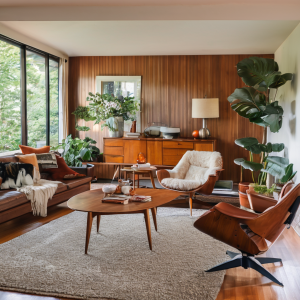
Mid-century modern design balances streamlined furniture, organic forms, natural materials, and expressive accents. To keep the room comfortable rather than overly formal, begin with a practical layout and add color, texture, lighting, and decor in measured layers.
Quick Guide
- Choose a few streamlined furniture pieces instead of filling the room with many small items.
- Leave clear paths between seating, tables, doors, and storage.
- Use wood, leather, or stone to introduce natural texture.
- Build the palette around earthy tones, then add one or two stronger accent colors.
- Combine ambient and task lighting so the room works for conversation, reading, and relaxing.
- Edit accessories carefully and keep frequently used surfaces functional.
Clean Lines and Organic Shapes
Clean lines and organic shapes form the foundation of mid-century modern interiors. Look for furniture with streamlined silhouettes, tapered legs, or gently curved profiles. In a small living room, raised furniture can preserve visible floor area and reduce visual heaviness. Arrange the main pieces around how the room is used rather than pushing every item against a wall.


Natural Materials
Wood, leather, and stone bring warmth and variation to the clean silhouettes associated with this style. Teak accents, leather upholstery, or a stone fireplace can serve as visual anchors, but the room does not need every material at once. Repeat one material in two or three places for continuity, and follow the appropriate care guidance for each surface.
Earthy and Vibrant Color Palettes
Olive green, mustard yellow, and burnt orange suit the earthy side of a mid-century palette. Use these colors according to the room's scale: larger areas can carry a restrained base color, while chairs, pillows, artwork, or vases can provide brighter accents. Limiting the number of competing statement colors helps the furniture shapes remain visible.
Contrasting Textures
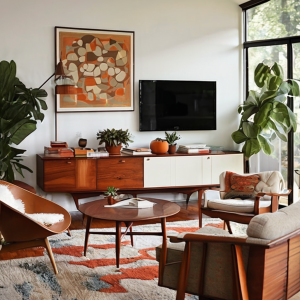
Texture prevents a streamlined room from looking flat. A plush shag rug can contrast with a sleek tufted sofa, while a rustic wooden table can sit beside a smooth, glossy side table. Keep the mix deliberate: repeat at least one texture or finish elsewhere in the room, and avoid layering so many tactile elements that the space becomes visually busy.
Iconic Lighting
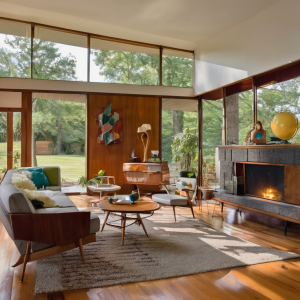
Sculptural floor lamps, curved forms, and pendant lights can reinforce the period-inspired look while supporting everyday activities. Place task lighting near reading or work areas and use broader lighting for general illumination. A sunburst mirror or starburst chandelier can become a focal point, so give it enough visual space rather than surrounding it with several competing accents.

Carefully Selected Accessories
Accessories should add personality without hiding the room's strong furniture lines. A retro bar cart, ceramic vase, graphic rug, or patterned throw pillows can introduce vintage character and geometric detail. Group smaller objects instead of scattering them across every surface, and reserve some open space for daily use and easier cleaning.

Discover the Timeless Appeal
The most convincing mid-century modern living rooms combine recognizable forms with the needs of the household. Keep the layout comfortable, choose a controlled palette, and allow a few distinctive pieces to lead the design. The result can reference the era without making the room feel like a themed set.
How to Choose the Right Elements
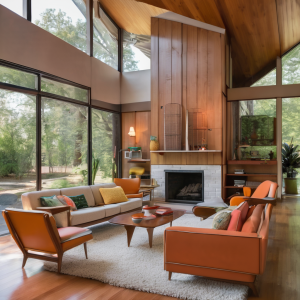
Start with the room's largest functional requirement, such as conversation seating or a reading area. Measure the available space before choosing furniture, and consider doorways, windows, and walking routes when planning placement. Select one primary material and a restrained base palette, then introduce contrast through a rug, chair, lighting fixture, or small accessories. If the room is compact, prioritize pieces that serve a clear purpose and storage that keeps everyday items contained.
Common Mistakes
- Buying several statement pieces that compete for attention.
- Choosing furniture for appearance without considering movement and daily use.
- Using too many retro references, which can make the room feel themed.
- Repeating bold colors across every surface instead of creating a clear focal point.
- Relying on a single light source rather than planning for different activities.
- Covering tables and shelves with accessories until they are no longer practical.
Frequently Asked Questions
Can mid-century modern style work in a small living room?
Yes. Choose a limited number of appropriately scaled pieces, maintain clear walking paths, and avoid crowding surfaces with decor. Streamlined furniture and visible floor area can also keep the layout visually organized.
Which colors work well in a cozy mid-century modern room?
Earthy colors such as olive green, mustard yellow, and burnt orange fit the style. Pair them with a quieter base and use brighter shades selectively so the palette remains balanced.
How can I add the style without replacing all my furniture?
Introduce one or two recognizable elements, such as a sculptural lamp, geometric rug, ceramic vase, or piece with a streamlined silhouette. Coordinate new additions with materials or colors already present in the room.
How do I keep a mid-century modern room from looking dated?
Focus on functional layouts, clean shapes, and a limited selection of period-inspired accents. Mixing those references with simple existing pieces creates a more natural, collected result.
How many accessories should I use?
There is no fixed number. Keep enough open surface area for everyday activities, group related objects, and remove pieces that compete with the room's main focal point.



0 Kommentare